Iglesia de San Juan Bautista de Arizkun
Legado en los huesosIglesia de San Juan Bautista de Arizkun is the setting for a series of escalating nocturnal desecrations that turns an apparent vandalism case into a search for the history behind a child’s skeletal remains. The church’s damaged altar and the small bones found inside make it both a crime scene and a crucial point of contact between the investigation and a concealed family tragedy.
Setting and First Response
On a winter night, the church interior shines against the darkness of its slender bell tower, which stands like a silent guard. Uniformed officers gather at the south-side porch, lighting the lock at the entrance. Amaia Salazar arrives by car with Jonan Etxaide asleep in the passenger seat; after waking him, she crosses the low wall around the church and goes inside.
The scene initially offers little to explain. Amaia reaches toward the holy-water font, then stops when she catches the smell of burning, which recalls scorched cloth. Inspector Iriarte is speaking with two alarmed priests, who stare toward the altar. The arrival of Doctor San Martín and the court clerk adds to the commotion, but Amaia does not yet see how a church vandalism case calls for her involvement.
Escalating Desecrations
The latest incident is the third in a succession of attacks over several weeks. In the first, someone entered at night and split the baptismal font in two. During a later break-in, an attacker used an axe to smash a front-row bench. The church had a simple sacristy-door lock and no alarm, but the intruders did not take the collection money: the destruction was directed at the building and its religious furnishings.
In the most recent attack, someone entered with a torch and set fire to the altar cloths. Because they were made of linen, they burned slowly, and the fire had gone out by the time a patrol arrived. A chaplain who lived nearby had begun checking the church after the earlier attacks; seeing lights inside, he alerted emergency services. The officers found no trace of the visitor or visitors. The repeated nighttime entries, the progression from broken stonework to smashed wood and then fire, and the absence of an apparent theft make the incidents more than ordinary property damage, even before the bones are uncovered.
The Child’s Remains
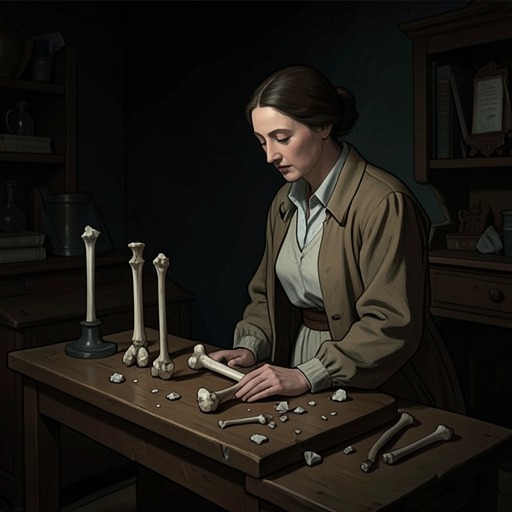
During the church investigation, Doctor San Martín draws back a sheet to reveal broken reeds and the tiny bones of a hand. Amaia identifies what she sees as a child’s arm; the doctor clarifies that it is skeletal, and estimates that the child was probably less than a year old. He calls the find a mairu-beso. Its small scale and the circumstances of its discovery sharply change the meaning of the case: the damaged church is now also the site of a disturbing human-remains discovery.
Investigative and Narrative Significance
When the incidents are reviewed with the church representatives, the account again emphasizes the sequence: the baptismal font, an axed bench reduced to splinters, and the altar fire that left bones behind. The repeated attacks thus frame the remains within a pattern of deliberate desecration, while leaving the identity and purpose of the person responsible unresolved in these scenes.
Later, the child’s remains enter Amaia Salazar’s investigation of her family history. The records she finds describe a twin birth in 1980 to Rosario Iturzaeta, and a separate death certificate records the death of a newborn daughter, attributed to what was commonly called cot death. In discussing the contradictions and irregularities surrounding that death, Amaia says that bones discovered in strange circumstances may have belonged to her sister. The church’s significance therefore extends beyond the attacks themselves: its desecrated altar and child’s bones become part of the evidence through which Amaia confronts a birth and death concealed from her family.